Hey everyone, it’s John, welcome to our recipe page. Today, I will show you a way to make a special dish, nerikiri wagashi: "tsubaki" (camellia). One of my favorites. For mine, I am going to make it a bit tasty. This is gonna smell and look delicious.
Nerikiri Wagashi: "Tsubaki" (Camellia) is one of the most well liked of current trending meals in the world. It’s simple, it is fast, it tastes yummy. It is enjoyed by millions every day. They’re nice and they look wonderful. Nerikiri Wagashi: "Tsubaki" (Camellia) is something that I’ve loved my entire life.
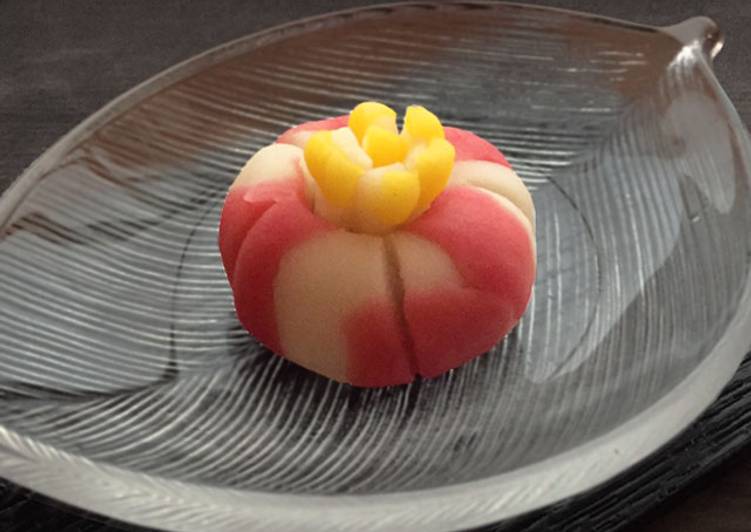
Great recipe for Nerikiri Wagashi: "Tsubaki" (Camellia). "Tsubaki" (Camellia) is a flower early spring. It's one of indispensable flowers for decorating "Cha-shitsu";a traditional Japanese tea rooms. Try to make "Tsubaki flowers" with Nerikiri and Kuro-an. Sweet soften Mochi cake - Camellia Nerikiri is one of traditional Japanese sweet desserts (wagashi), served in Japanese tea ceremony as well as in modern Japanese kitchen.
To begin with this particular recipe, we must first prepare a few ingredients. You can have nerikiri wagashi: "tsubaki" (camellia) using 4 ingredients and 11 steps. Here is how you can achieve that.
The ingredients needed to make Nerikiri Wagashi: "Tsubaki" (Camellia):
- Get 10 g Koshi-an (pâte d‘haricots rouges sacrée)
- Prepare 20 g Nerikiri pâte
- Prepare Veuillez trouver mon recette <<"Pâte pour"Nerikiri Wagashi (des confiseries traditionnelles japonaises)>>
- Make ready + Colorant alimentaires
Winter Sweets made of white beans, sugar, and yam imitating a leaf with sweet red bean paste in it (www.tamachi-baigetsu.co.jp) It expresses winter leaves. camellia blossoms (nerikiri series) In my previous post, I explained how to make nerikiri, a combination of sweet white bean paste (shiro-an) and rice flour (shiratamako) that is the basis for a whole category of traditional Japanese sweets. Once you get the hang of neriki, this camellia blossom wagashi is a cinch to make. It's one of indispensable flowers for decorating "Cha-shitsu";a traditional Japanese tea rooms. Try to make "Tsubaki flowers" with Nerikiri and Kuro-an. liarra Flower: Tsubaki (camellia) Month: January Wagashi type: Domyoji manju Flower: Ume (plum blossom) Month: February Wagashi type: Konashi Flower: Momo Month: March Wagashi type: Kinton Flower: Sakura (cherry blossom) Month: April Wagashi type: Nerikiri Flower: Tessen (clematis) Month: May Wagashi type: Uiro Flower: Ajisai Month: June In my previous post, I explained how to make nerikiri, a combination of sweet white bean paste (shiro-an) and rice flour (shiratamako) that is the basis for a whole category of traditional Japanese sweets.
Steps to make Nerikiri Wagashi: "Tsubaki" (Camellia):
- Ingrédients pour 1
- Ustensiles
- Pétrir cette Nerikiri pâte bien. La partager en chaque pièce.
- Coloriser une petite pièce pour des étamines jaune.
- Coloriser une petite pièce pour des pétales rouge.
- (Toutes les pièces sont complètes)
- Faire des pétales. Faire la pâte blanche cercle. Partager la pâte rouge en 7 ou 8 et les mettre sure la pâte blanche. Envelopper une pâte d‘haricots rouges avec elle.
- Faire 5 fosses de bas à haut. (La partager en 5 égal)
- L'écraser un peu. Faire une cavité ronde dans le centre.
- Faire des étamines. Faire la pâte blanche rectangle et la pâte jaune bande. Les joindre. Faire des incisions. La retourner et rouler.
- Mettre la pièce étamines sur le centre de le fleur.
It's one of indispensable flowers for decorating "Cha-shitsu";a traditional Japanese tea rooms. Try to make "Tsubaki flowers" with Nerikiri and Kuro-an. liarra Flower: Tsubaki (camellia) Month: January Wagashi type: Domyoji manju Flower: Ume (plum blossom) Month: February Wagashi type: Konashi Flower: Momo Month: March Wagashi type: Kinton Flower: Sakura (cherry blossom) Month: April Wagashi type: Nerikiri Flower: Tessen (clematis) Month: May Wagashi type: Uiro Flower: Ajisai Month: June In my previous post, I explained how to make nerikiri, a combination of sweet white bean paste (shiro-an) and rice flour (shiratamako) that is the basis for a whole category of traditional Japanese sweets. Once you get the hang of neriki, this camellia blossom wagashi is a cinch to make. Unlike the spring-time sakura (cherry)-domyoji, camellia leaves used for this confectionary are not edible. We add ingredients such as sugar, mountain potatoes and minkin powder to the white bean paste, and confectionery made from pasted paste (white beans) that has been adjusted and adjusted is called "NERIKIRI".
So that’s going to wrap this up with this special food nerikiri wagashi: "tsubaki" (camellia) recipe. Thanks so much for your time. I’m confident you can make this at home. There is gonna be interesting food in home recipes coming up. Remember to save this page in your browser, and share it to your loved ones, colleague and friends. Thanks again for reading. Go on get cooking!